

.svg)

.svg)


.svg)
.svg)
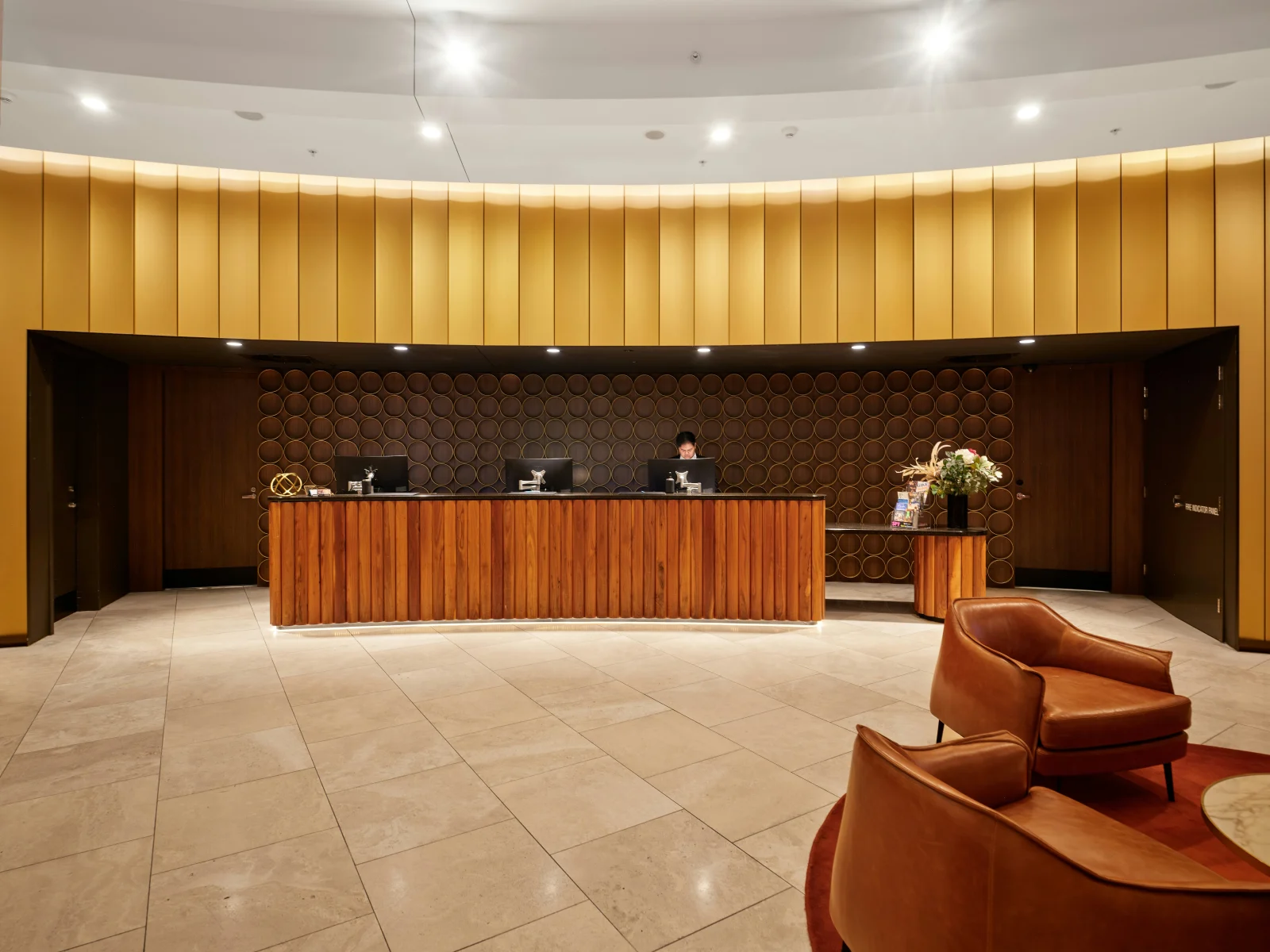
A satisfied guest leaves your hotel with a smile. Six months later, they book… with your competitor. Satisfaction does not guarantee loyalty. For independent hotels, where every direct booking counts, hotel loyalty is not just a cosmetic program: it is a measurable driver of profitability.
The difference between a one-time guest and a repeat customer is determined in the 48 hours following their departure. This is where brand memory is built, habits are formed, and the next booking is triggered. Turning a stay into a recurring relationship requires a structured strategy, not just a simple thank-you email.
Satisfied guests don't return automatically
Satisfaction measured by online reviews does not predict a return. A guest can leave 5 stars and never book again. Three obstacles explain this paradox:
No reason to return. The guest has no immediate plans in your area. Without a stimulus, your hotel falls off their mental radar within weeks. Advertising competition (Google Ads, metasearch engines) captures their attention as soon as a new need arises.
The cognitive cost of booking. Booking requires effort: comparing dates, checking rates, filling out a form. Faced with this cost, the guest often chooses the most visible option at the time of need, not the one they have already tried.
Undifferentiated offers. If your proposition looks like that of ten other establishments, the guest has no rational reason to choose you. Loyalty requires a perceived, tangible, and exclusive advantage.
Hotel loyalty consists of systematically removing these three obstacles.

Post-stay email: timing, content, and offers to trigger bookings
The post-stay email should not just say thank you. It must trigger an action. Three parameters determine its effectiveness:
Timing. The email should be sent 24 to 48 hours after departure, while the experience is still fresh and the guest has not yet been solicited by other brands. Sending it too late (7 days later) means the guest has already mentally moved on.
Content. Avoid generic phrases ("We hope you enjoyed your stay"). If possible, the email should recall a specific element of the stay (room with a view, dinner at the restaurant, a local event during their visit), then introduce the offer directly. Personalization should not feel forced: a simple, relevant message is better than a fake sense of closeness.
The offer. A 10% to 15% discount on the next direct booking, valid for 3 to 6 months. The offer must be attractive enough to compensate for the effort of booking, but not so much that it cannibalizes your margins. It must be exclusive to the direct channel (not applicable via OTAs) to reinforce the value of the direct relationship.
The goal isn't for 100% of customers to book immediately. A conversion rate of just 5 to 10% is enough to make the system profitable. Every direct booking avoids an OTA commission (15 to 20%) and increases the customer's lifetime value.
Loyalty program for independent hotels: simple and profitable
Major hotel groups deploy complex programs with points, tiers, and partnerships. An independent hotel has neither the resources nor the interest to replicate this model. An effective program relies on three simple mechanics:
Immediate reward. From the second booking, the guest enjoys a tangible benefit: automatic upgrade if available, complimentary breakfast, or late check-out. No points to accumulate, no thresholds to reach. The reward is visible from the second stay.
Perceived exclusivity. The program provides access to services not available via OTAs: priority booking for specific rooms, access to flash offers, or invitations to events (tastings, local tours). Exclusivity justifies booking directly.
Lightweight management. The program relies on your existing booking system or a simple CRM. No external platform, no mobile app. A database with three fields is enough: email, number of stays, and date of last visit. Complexity kills execution.
An independent hotel loyalty program is not meant to compete with Marriott Bonvoy. It should create minimal friction for the repeat guest and a measurable economic advantage for the hotel.

Customer segmentation: who is worth the loyalty effort
Not all customers have the same potential for repeat business. Focusing your efforts on high-value segments increases the ROI of your loyalty strategy. Three segmentation criteria are relevant:
Frequency of visits to the region. A business traveler visiting your city monthly has high repeat potential. A tourist on a one-time trip has low potential, unless you operate in a weekend destination accessible from their home.
Initial booking channel. A guest who booked directly on their first stay is more loyal than a guest who arrived via an OTA. They have already made the effort to book directly. Your goal is to reinforce this behavior.
Average spend. A guest who books superior rooms, dines at the restaurant, or extends their stay generates more value. They justify a greater loyalty effort (more generous offers, personalized contact).
Segmentation does not require complex tools. A simple classification into three categories (high value, medium value, low value) allows you to adapt the intensity of the relationship: personalized email + enhanced offer for the first segment, standard email for the second, and no solicitation for the third.
Hotel CRM: centralizing data to personalize the relationship
Personalization is built on memory. A hotel CRM centralizes guest information to foster an ongoing relationship rather than a series of anonymous interactions. Four types of data form the foundation of this memory:
Stay history. Dates, room type, services used, and total spend. This data allows you to calculate lifetime value and identify your most frequent guests.
Declared or observed preferences. Smoking/non-smoking room, high floor, king-size bed, food allergies. These preferences, collected during the first stay or via post-stay surveys, allow you to anticipate needs for future bookings.
Marketing interactions. Emails opened, offers clicked, and bookings converted. This data measures engagement and helps you adjust the frequency of your outreach.
Feedback and reviews. Comments left on your website, responses to satisfaction surveys, and public reviews. This qualitative data reveals guest expectations and potential pain points.
A hotel CRM doesn't need to be overly complex. A solution like HubSpot, Salesforce, or even Airtable is sufficient if it allows you to:
- Segment guests based on defined criteria
- Automate post-stay emails and loyalty offers
- Track conversions (bookings resulting from loyalty campaigns)
- Export data to calculate ROI
The value of a CRM lies not in its features, but in the discipline of its use. A simple tool used consistently beats a powerful tool used only occasionally.

Measuring loyalty ROI: return rate and lifetime value
A hotel loyalty strategy should be justified by economic indicators, not just good intentions. Two metrics measure the effectiveness of your efforts:
Return rate. The percentage of guests who have stayed at least twice over a given period (12 or 24 months). A return rate of 15% to 25% is considered healthy for an independent hotel. Below 10%, your loyalty strategy is either ineffective or non-existent.
Calculation: (Number of guests who booked at least twice during the period / Total number of unique guests during the period) × 100.
Lifetime Value (LTV). The total revenue generated by a guest throughout their entire relationship with the hotel. A guest who returns three times in two years with an average spend of €250 generates an LTV of €750. Compare this LTV to your Customer Acquisition Cost (CAC): if LTV > 3 × CAC, your strategy is profitable.
The ROI of loyalty is also measured by the reduction in dependency on OTAs. Every direct booking from a loyal guest avoids a 15–20% commission. On a €200 booking, that represents €30 to €40 in additional margin. If your loyalty program costs €10 per guest (in discounts offered), the net gain is €20 to €30 per booking.
Also measure the time between bookings. The shorter this interval, the more active the relationship. A guest who books every 4 months has a higher value than one who books every 12 months, even if their average spend is identical.
Building recurrence as a strategic asset
Hotel loyalty is not just a marketing program. It is a strategic asset that reduces acquisition costs, increases net margins, and decreases dependency on third-party platforms. A repeat guest costs less to serve, books directly more often, and is more tolerant of price fluctuations.
Recurrence is built in the 48 hours following departure, strengthened by a simple and exclusive program, targeted at high-value segments, managed through disciplined CRM use, and measured by clear economic indicators. Every percentage point gained in return rate represents thousands of euros in additional direct revenue over 12 months.
Turning a stay into a repeat visit requires neither a massive budget nor complex technology. It requires rigorous execution, a differentiated offer, and disciplined follow-up. Hotels that master this mechanism build a predictable, profitable customer base that is independent of distribution algorithms.


.svg)

.svg)
.svg)