

.svg)

.svg)


.svg)
.svg)
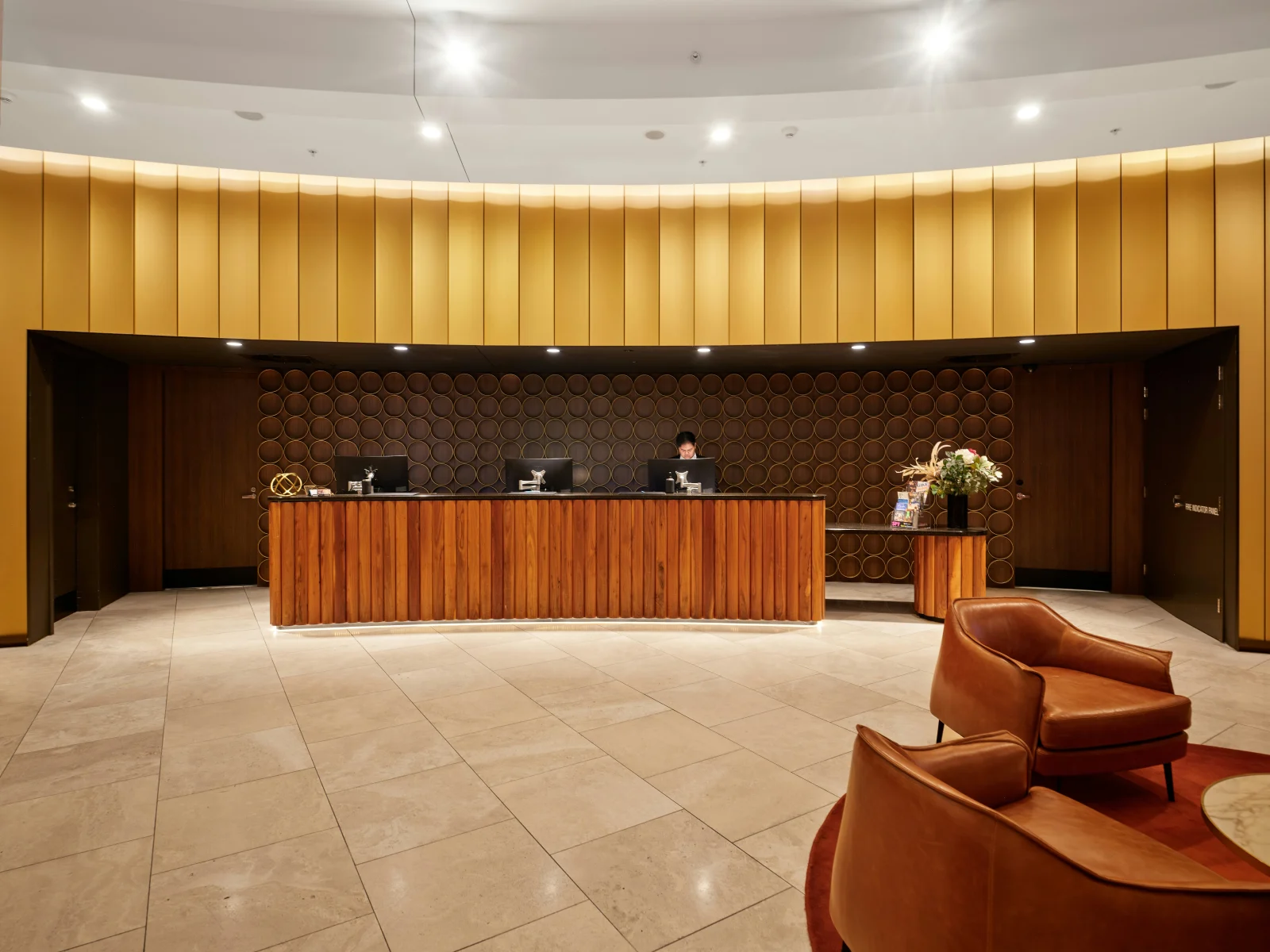
A room remains empty. The guest is no longer responding. Yet, the booking was confirmed.
For the hotel, the reality hits hard: this room night will likely go unsold.
The immediate reaction is to look at the cancellation policy, the credit card guarantee, or the possibility of charging for the stay.
But at this stage, the outcome has already been decided.
A no-show is not just an incident that happens on the day of arrival. It is often the result of a series of small decisions made—or not made—in the days leading up to the stay.
The interesting question, therefore, becomes less about "how do we charge the absent guest?" and more about:
how can we reduce no-shows while maintaining a simple and reassuring booking experience?
Not all no-shows tell the same story
Behind an empty room, there can be very different situations.
Some travelers book multiple options and make their final choice at the last minute.
Others have simply changed their plans without thinking to cancel.
There are also date errors, bookings made long in advance and then forgotten, changed business trips, or travel disruptions.
Putting all these situations into the same category easily leads to a one-size-fits-all response.
A particularly strict policy may limit certain opportunistic behaviors. It can also penalize a guest acting in good faith who is facing an unforeseen event.
The first step is therefore to understand where the establishment's no-shows are actually coming from.
Booking channel, lead time, stay type, time of year, leisure or business clientele: a few simple data points are enough to reveal significant differences.
No-shows then cease to be a statistical inevitability.
They become a behavior that can be better anticipated.

A cancellation policy should protect without discouraging
There is no one-size-fits-all cancellation policy for every hotel.
An establishment heavily dependent on a few periods of peak demand will not face the same constraints as an urban hotel with a steady flow of last-minute bookings.
The right policy therefore seeks a balance.
Too flexible, and it leaves all the risk with the hotel.
Too rigid, and it can deter bookings or cause disproportionate friction when the unexpected happens.
The real challenge is primarily clarity.
At the time of booking, the guest must understand:
- until when they can modify or cancel;
- what will be charged thereafter;
- whether a credit card imprint or pre-authorization is required;
- in what situations some flexibility might be considered.
A rule that is difficult to understand at the time of booking will almost always be harder to defend when a dispute arises.
A credit card guarantee is no substitute for communication
Pre-authorization or secure payment method registration can obviously reduce financial risk.
But they do not, on their own, solve the no-show problem.
A guest may have a perfectly valid card and still have forgotten about their stay.
They may also have changed their plans without realizing that their cancellation deadline had passed.
The guarantee protects the hotel in that case.
It does not free up the room.
This is an important distinction.
The best approach therefore combines financial protection and operational prevention.
And this is where pre-arrival communication becomes particularly valuable.
The right reminder can save a booking… or free up a room
A few days before arrival, a message serves several purposes.
It can serve as a reminder of the booking.
It can allow the guest to confirm their stay.
It can also offer them a very simple way to signal that they will not be coming after all.
This last point is often underestimated.
A cancellation made early enough is not necessarily bad news. It gives the establishment another chance to sell the room.
The pre-arrival message should therefore not feel like a demand.
It should make it easier to reach a decision.
For example:
"We are preparing for your arrival on Friday. Is your stay still confirmed?"
Then clearly offer the available options.
Depending on the type of establishment, several moments can be tested: a few days after booking for stays booked well in advance, one week before arrival, and potentially a final message as the stay approaches.
The goal is not to send more messages.
It is to send the right message at a time when the guest can still take action.

Automate the follow-up, not the relationship
A PMS or marketing automation tool can easily trigger emails or SMS based on the arrival date.
Technically, the problem is therefore relatively simple.
Editorially and commercially, it is much less so.
An impersonal message sent three times with the same content can quickly become noise.
Conversely, a few contextual details can make communication truly useful: check-in time, hotel access, parking, transfers, the ability to modify the booking, or a contact person in case of difficulty.
The reminder then becomes a service.
This is an interesting rule for many automated systems in the hospitality industry:
automation should eliminate unnecessary effort, not eliminate the attention paid to the guest.
Overbooking is not a universal recipe
Overbooking can be an effective management tool when a property has enough historical data to estimate its cancellations and no-shows.
However, it should never become a mechanical formula.
Accepting more reservations than available rooms means accepting a risk: the risk that everyone shows up.
You must therefore be able to answer several questions before using this strategy.
Is the no-show rate consistent enough?
Are there significant differences depending on the channels or periods?
Does the property have a credible relocation solution in place?
What would be the financial—and relational—cost of a confirmed guest for whom no room can ultimately be provided?
The smaller the hotel, the heavier the impact of a forecasting error.
Overbooking is therefore not a way to compensate for a poor understanding of your reservations.
It becomes relevant only when that understanding is already solid.
When a no-show is charged, the customer relationship continues
The file is not closed once the card is charged.
It may even be the start of a new phase.
A guest who discovers an unexpected charge will naturally seek to understand, dispute, or negotiate it.
The way the hotel handles this conversation matters almost as much as the rule itself.
You must be able to calmly reiterate the agreed-upon terms, explain why they were applied, and listen to the guest's situation.
Certain circumstances may also justify an adjustment.
The goal is not to scrap every rule as soon as a guest complains.
The goal is to prevent a perfectly legitimate business policy from turning into an unnecessarily confrontational experience.
Because the real question isn't just:
"Did we have the right to charge?"
But also:
"How will this decision be perceived and understood?"
Measuring no-shows to understand where to take action
An overall rate provides a snapshot.
It rarely explains the problem.
To be truly useful, tracking must allow you to distinguish between several dimensions: booking channel, lead time, period, rate type, customer segment, or the reminder method used.
You might then discover, for example, that a supposedly general problem is actually concentrated on one channel or on certain bookings made well in advance.
The response immediately becomes more precise.
Instead of tightening conditions for all guests, the hotel can take action where the risk actually exists.
This is often the difference between a defensive policy and a management strategy.
The best no-show is the one the hotel sees coming
An empty room will always be frustrating.
But trying only to recover the cost means intervening at the end of the story.
Hotels today have enough data, tools, and communication channels to act much earlier.
Understand at-risk bookings.
Define clear conditions.
Secure payment when necessary.
Create truly useful pre-arrival communication.
And provide customers with a simple way to report changes to a project.
The paradox is this:
reducing no-shows isn't necessarily about locking customers further into their bookings.
It is often about communicating with them better before it's too late.



.svg)

.svg)
.svg)