

.svg)

.svg)


.svg)
.svg)
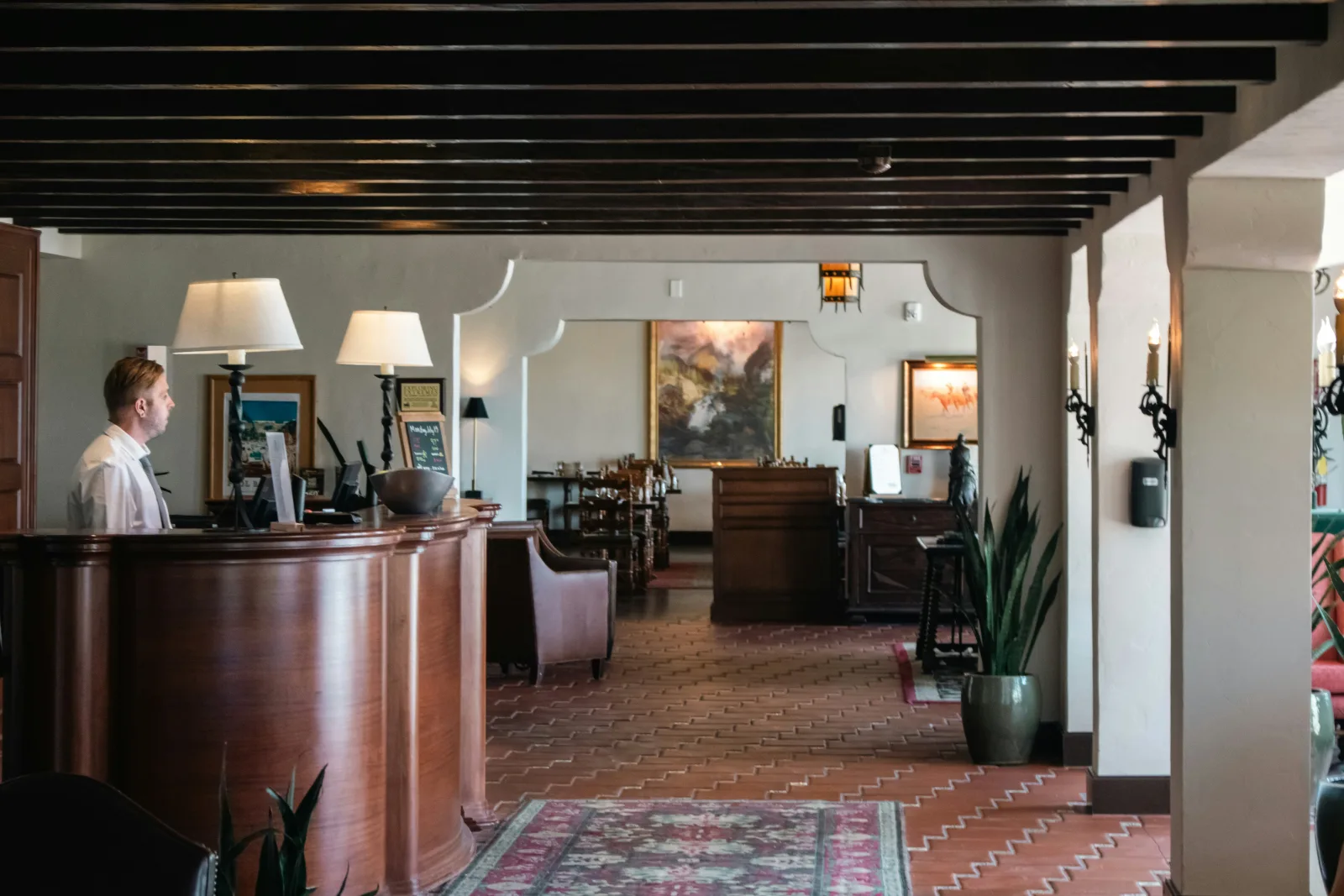
A 45-room boutique hotel in the city center loses 12 bookings a week because its PMS doesn't sync availability with Booking.com in real time. The manager discovers double bookings every morning via email. This scenario plays out in hundreds of independent properties that have underestimated the role of the independent hotel PMS as critical infrastructure, rather than just a management tool.
The Property Management System now structures the entire value chain: multichannel distribution, yield management, guest experience, and financial oversight. For an independent hotel, choosing the right PMS determines its ability to compete with chains on operational efficiency while preserving its unique identity.
The PMS: The operational backbone of the modern hotel
The PMS has evolved from a simple digital register into an orchestration platform. Today, it connects the front desk, housekeeping, billing, CRM, distribution channels, and payment systems. This centralization transforms once-manual processes into automated workflows.
For an independent property, this architecture offers three structural advantages:
Real-time visibility : room status, arrivals, departures, and special requests flow instantly between teams. The receptionist sees that a room has just been cleared by housekeeping and can immediately assign it for an early check-in.
Multichannel rate consistency : centralized rate management prevents price discrepancies between the direct website, OTAs, and the GDS. A rate change is automatically pushed to all channels within minutes.
Traceability of guest interactions : stay history, preferences, and past issues are consolidated into a single profile. A repeat guest finds their favorite room and preferences waiting without having to ask again.
This infrastructure becomes critical once a hotel exceeds 15-20 rooms or works with more than three distribution channels. Below that, a lightweight system may suffice. Beyond that, manual processes create bottlenecks that degrade the guest experience and generate costly errors.

Cloud vs. on-premise: The cost-flexibility trade-off in 2026
The deployment model shapes costs and flexibility for the next five years. On-premise (local server) and cloud (SaaS) PMS solutions address different constraints.
Cloud model: Agility and scalability
SaaS solutions dominate the independent market for three reasons:
Low initial investment : no servers to purchase, no complex network infrastructure. The monthly subscription includes hosting, maintenance, and updates. A property can start with a predictable monthly budget rather than a heavy CAPEX investment.
Automatic updates : new features, security patches, and regulatory updates (e-invoicing, GDPR) are deployed by the provider without any manual intervention. The hotel always benefits from the latest version.
Remote access : the manager can check key performance indicators from home, and the revenue manager can adjust rates while on the move. This mobility is becoming essential for smaller properties without a permanent technical team.
However, the cloud model has two drawbacks: dependence on an internet connection (an outage halts operations) and recurring costs that add up over time.
On-premise model: control and autonomy
Some premium establishments still prefer local installation:
Total data control : guest information remains on an internal server, without passing through third-party data centers. This is a key selling point for high-end hotels managing a clientele sensitive to privacy.
Technical independence : no reliance on a cloud provider. The hotel can change maintenance providers or manage updates itself if it has the necessary IT expertise.
Long-term cost stability : after the initial investment (server, licenses, installation), annual costs are limited to maintenance. Over 7-10 years, the TCO can be lower than the cloud for stable operations.
In return, this model requires a high initial investment (server, perpetual licenses, installation), an IT team or provider for maintenance, and manual updates that often lead to functional lag.
For an independent hotel with 20 to 60 rooms and no internal IT department, the cloud is the standard. On-premise remains relevant for properties with over 80 rooms that have a technical team or very strict data sovereignty requirements.

OTA and CRS integrations: the true test of a PMS's maturity
An isolated PMS loses 70% of its value. The ability to connect natively to distribution channels and third-party systems distinguishes mature solutions from basic tools.
Integrated or connected channel manager
The channel manager synchronizes availability and rates between the PMS and OTAs (Booking, Expedia, Airbnb). Two architectures coexist:
Native integration : the channel manager is a module within the PMS. Synchronization is instantaneous, and data flows without intermediaries. This architecture eliminates delays and transmission errors.
Third-party API connection : the PMS connects to an external channel manager (SiteMinder, Cubilis). This approach offers more flexibility (choice of channel manager) but introduces an additional point of friction and extra costs.
For an independent hotelier, native integration simplifies management and reduces costs. A third-party connection becomes relevant if the hotel already has a high-performing channel manager or manages multiple properties with different PMSs.
CRS and GDS connections
Establishments targeting business or international clientele must distribute their rooms via GDS (Amadeus, Sabre, Travelport). The PMS must then connect to a Central Reservation System that bridges the gap with these platforms.
This integration remains complex and costly. It becomes profitable once a certain volume of corporate or group bookings is reached. A leisure-oriented boutique hotel can do without it; a 4-star business hotel will consider it essential.
Open APIs and ecosystem
Modern PMSs provide APIs that allow for the connection of third-party tools: CRM (HubSpot), accounting (Sage, QuickBooks), payment (Stripe, Adyen), smart locks, and guest messaging systems.
This openness determines the system's scalability. A closed PMS forces you to rebuild everything if you change a business tool. A PMS with documented APIs allows you to gradually assemble a custom technology stack.
Before choosing, check the list of native integrations and the quality of the API documentation. A PMS that claims "200 integrations" without technical details often masks obsolete or unmaintained connections.
Benchmarking 5 PMS solutions for premium independent hotels
Five players stand out in the segment of independent hotels with 20 to 100 rooms, each with a distinct positioning.
Mews
A pure-play cloud PMS, Mews targets modern establishments that want a seamless user experience. It features an intuitive interface, fast onboarding, and native integrations with major channel managers and payment systems. Its guest messaging module and online check-in portal appeal to hotels looking to digitize the guest experience.
Limitation: less suitable for establishments with advanced customization needs or highly specific business processes.
Protel
A long-standing European solution, Protel offers both a cloud version (Protel Air) and an on-premise version. It is strong in group and event management features, making it suitable for hotels that host seminars and receptions. It offers solid integrations with POS and billing systems.
Limitation: interface is less modern than cloud-native players, and the learning curve is steeper.
Cloudbeds
An all-in-one PMS with an integrated channel manager, booking engine, and revenue management tools. It avoids the need for multiple subscriptions. It is particularly well-suited for new establishments that want a complete solution without having to assemble several different tools.
Limitation: Integration with advanced third-party tools (CRM, accounting) is less deep than with modular PMS solutions.
Opera Cloud (Oracle)
The cloud version of Opera, historically reserved for chains, is gradually opening up to premium independent hotels. It offers exceptional functional depth, multi-property management, and advanced reporting. It is suitable for properties with over 60 rooms that have complex needs (spas, multiple restaurants, membership management).
Limitation: High cost, complex configuration, and requires professional support.
Hotelogix
A value-oriented cloud solution, Hotelogix appeals to mid-sized properties that want essential features without overpaying. It offers decent integrations with major OTAs and a functional interface.
Limitation: Fewer advanced features (yield management, CRM), and support can sometimes be slower than that of premium providers.
The choice depends on your profile: a design boutique hotel will prefer Mews, a property with event spaces will choose Protel, a startup independent will opt for Cloudbeds, a complex 4-star hotel will go with Opera Cloud, and a cost-efficient establishment will favor Hotelogix.

Migrating without closing: The 3-phase transition method
Changing your PMS is a major operational risk. A poorly prepared migration can block reservations, lead to lost customer data, or cause double bookings. This three-phase method limits these risks.
Phase 1: Audit and preparation (3-4 weeks)
Clean up data before migration: remove duplicate customer profiles, archive old reservations, and standardize formats (phone numbers, addresses). Map fields between the old and new systems to prevent information loss.
Form an internal project team: a front-desk lead, an accounting lead, and the manager. This trio will oversee the migration and validate each step.
Plan the switchover: choose a period of low occupancy (avoid weekends, long weekends, and local events). Block out a half-day of intensive training for the entire team on the go-live date.
Phase 2: Parallel testing (2-3 weeks)
Run both systems simultaneously using a sample of reservations. Enter new bookings into both PMS platforms, verify data consistency, and test integrations (channel manager, payments, door locks).
This phase identifies configuration gaps and bugs before the final switch. It also reassures staff as they discover the new system without pressure.
Phase 3: Switchover and stabilization (1 week)
Switch at the beginning of the week (Tuesday or Wednesday) to allow time to fix issues before the weekend. Migrate all future reservations, active customer profiles, and recent history (the last 6-12 months).
Arrange for enhanced vendor support during the first 48 hours: a dedicated hotline or a technician on standby. The first few days account for 80% of questions and incidents.
Keep the old system accessible in read-only mode for one month to consult history if needed. Then, archive the data in accordance with legal requirements.
A well-executed migration takes 6 to 8 weeks from launch to stabilization. Underestimating this timeframe or neglecting training creates operational issues that degrade the customer experience for weeks.
Key takeaways
Choosing a PMS for an independent hotel shapes operational capacity for the next five years. Three criteria take precedence: deployment architecture (cloud for agility, on-premise for control), the depth of OTA and third-party system integrations (which determines distribution efficiency), and the migration method (which dictates service continuity).
Properties with 20 to 60 rooms and no internal IT team will gravitate toward all-in-one cloud solutions (Mews, Cloudbeds) that minimize complexity. Larger structures or those with specific business needs (events, multi-property management) will favor modular platforms (Protel, Opera Cloud) that offer more flexibility at the cost of increased complexity.
The classic mistake is to underestimate the cost of migration and the impact on teams. A cheaper PMS that requires three months of stabilization and degrades service quality ultimately costs more than a well-implemented premium solution. The decision must factor in the total cost of ownership over 5 years, not just the monthly subscription.


.svg)

.svg)
.svg)