

.svg)

.svg)


.svg)
.svg)
When a traveler searches for "hotel Lyon city center" on Google, the top three results capture 75% of clicks. And in 9 out of 10 cases, these premium spots are held by OTAs. For independent hotels, this battle for visibility is not a lost cause: local hotel SEO offers a playing field where authenticity and proximity beat massive advertising budgets.
The difference between a property that suffers under 15-25% platform commissions and one that generates 60% of its bookings directly often comes down to a structured local strategy. It’s not about technical miracles, but a methodical approach that turns every location-based search into a conversion opportunity.
Local visibility: why OTAs crush independent hotels on Google
Booking platforms dominate search results through a structural advantage: they aggregate thousands of properties, generating a volume of content and backlinks that no single hotel can match. Their domain authority mechanically overshadows independent sites on generic queries.
But this dominance has a flaw: Google prioritizes local intent. When a user searches for "boutique hotel Bordeaux Chartrons," the algorithm detects proximity intent and activates the local pack (Google Maps + 3 geolocated results). At that precise moment, domain authority matters less than geographic relevance and the quality of the local profile.
OTAs invest heavily in SEA to compensate for this weakness. An independent hotel that optimizes its local SEO captures organic traffic while platforms pay for every click. The budgetary asymmetry is reversed: you turn their strength (paid visibility) into an economic weakness.
The real lever? Local granularity. A hotel knows its neighborhood, its events, and its unique features. This on-the-ground knowledge, translated into structured content, consistently beats the generic descriptions of OTAs on long-tail geolocated queries.

Hotel Google Business Profile: optimizing your listing to convert local searches
Your Google Business Profile (GBP) is your storefront in the local pack. Yet 70% of independent hotels treat it like a static directory, when it actually functions as a dynamic mini-site indexed in real time.
The non-negotiable fundamentals :
- Precise primary category: "Hotel" is not enough. "Boutique hotel," "Charming hotel," or "Business hotel" target different intents and improve matching with qualified queries.
- Comprehensive attributes: Free Wi-Fi, parking, accessibility, pets allowed. Every checked attribute acts as a potential search filter.
- Reception opening hours: Google penalizes incomplete listings. Specify your check-in/check-out times.
- Regular professional photos: At least 20 photos, updated quarterly. Properties with 100+ photos generate 2x more direction requests.
Advanced optimization that sets you apart :
- Weekly posts: Seasonal offers, local events, new features. Google rewards active profiles in local rankings.
- Proactive Q&A: Anticipate frequently asked questions (parking, pets, breakfast) and answer them before they are even asked. This reduces conversion friction.
- Direct booking button: Integrate the link to your own booking engine, not an OTA. Every diverted click is a commission saved.
Your GBP listing is not just an administrative form; it is an acquisition channel that should be optimized just like your website. A hotel that publishes 2 posts per week and responds to questions within 2 hours generates 40% more requests compared to a passive profile.

Customer reviews and local SEO: turning online reputation into a ranking lever
Google explicitly incorporates the volume, average rating, and recency of reviews into its local ranking algorithm. A property with 200 reviews and a 4.5/5 star rating will consistently outperform a competitor with a 4.8/5 rating and only 30 reviews. Quantity matters just as much as quality.
Structured review acquisition strategy :
- Post-stay timing: ask for feedback 24-48 hours after checkout, while the experience is still fresh but the guest isn't overwhelmed.
- Multi-channel: automated email + in-room QR code + SMS reminder. Hotels that diversify their channels triple their response rate.
- Maximum ease: direct link to Google, no redirects. Every extra point of friction cuts the conversion rate in half.
Managing negative reviews as a quality signal :
Google favors profiles that respond to reviews, especially negative ones. A professional response to a critique turns a negative signal into proof of reliability. Effective format: acknowledge the issue + factual explanation + corrective action.
Keywords in customer reviews enrich your local semantic field. When 15 guests mention "near the station," "quiet neighborhood," or "organic breakfast," Google associates these terms with your establishment. Encourage detailed reviews rather than silent star ratings.
Beware of prohibited practices : buying reviews, conditional incentives ("leave 5 stars and get..."), or selective deletion. Google detects these patterns and penalizes them severely. Natural consistency always beats manipulation.
Local hotel content: creating pages that answer geolocated queries
Your homepage targets "[city] hotel." But 60% of hotel searches include geographic or contextual qualifiers: "hotel near stadium," "business district accommodation Lyon Part-Dieu," "romantic hotel old Lille."
Every qualified query represents strong commercial intent. Creating dedicated pages captures this long-tail traffic that OTAs cannot target precisely.
High-performance local content architecture :
- Neighborhood/POI pages: "Our hotel near [station/museum/convention center]." Include exact distance, access methods, and travel time.
- Recurring event pages: "Accommodation for [city] Marathon," "[city] Fair Hotel." Optimize 2-3 months before the event.
- Local guides: "Things to do in [neighborhood]: our top picks." Recommendations for restaurants, bars, and activities. This positions the hotel as a local expert.
Critical on-page optimization :
- Unique title tag: "[Hotel Name] - 5-minute walk from [POI] | [City]."
- Action-oriented meta description: "Book your room 300m from [POI]. Free parking, breakfast included. Best rate guaranteed."
- LocalBusiness schema markup: structured data that enhances your SERP snippet (star ratings, price range, availability).
Local content isn't just technical SEO; it's digitized on-the-ground expertise. A receptionist who advises guests on neighborhood restaurants every day holds the raw material for 10 optimized articles. Structure this knowledge.
Measuring local SEO ROI: traffic, direct bookings, attribution
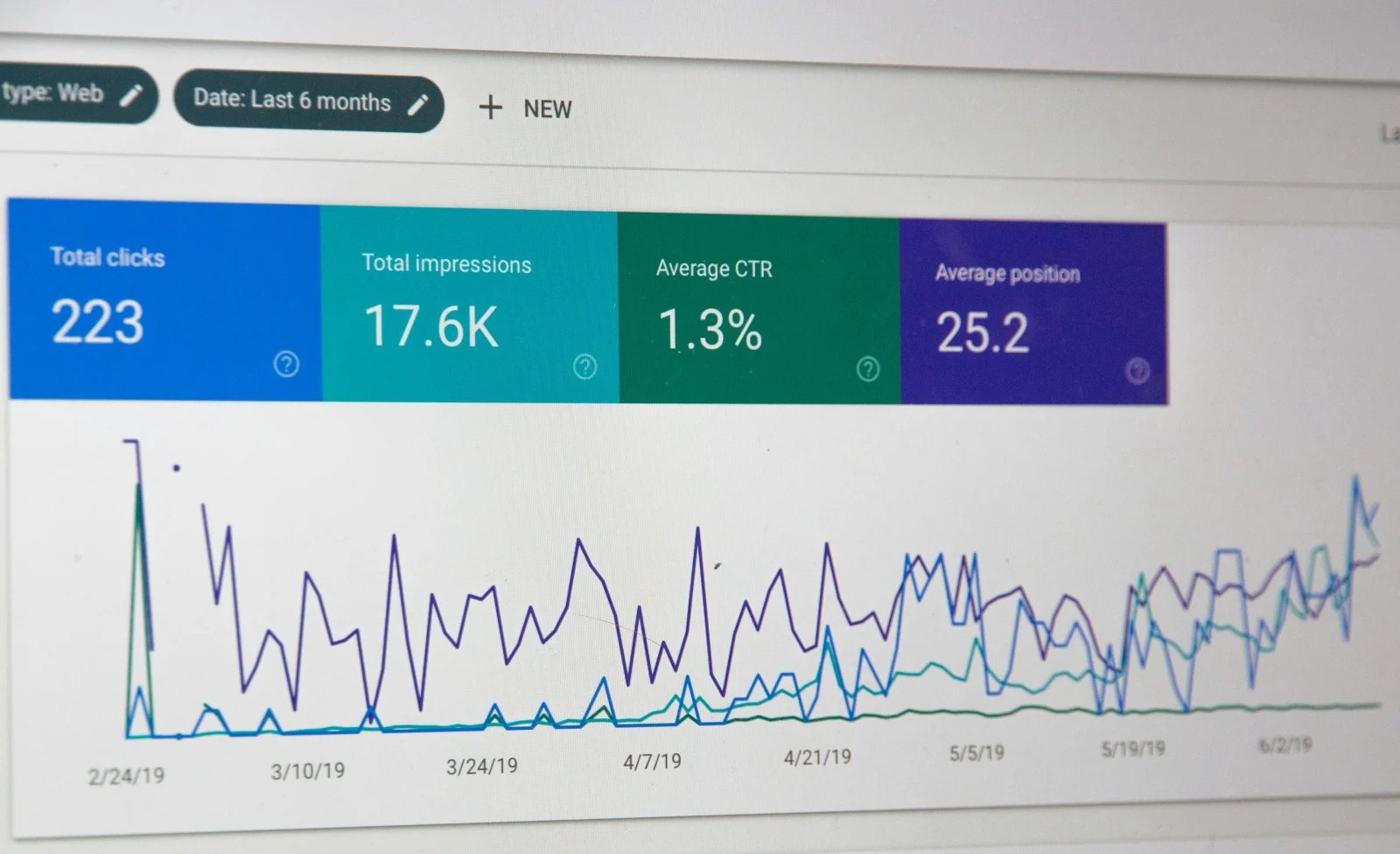
Local SEO generates three types of measurable value: visibility (impressions/clicks), engagement (calls/direction requests), and conversion (attributable direct bookings).
Priority KPIs in Google Business Profile Insights :
- Discovery queries vs. direct searches: a ratio that measures your ability to capture new customers versus your existing brand awareness.
- User actions: phone calls, direction requests, website clicks. Each action avoids a potential OTA commission.
- Ranking trends: average position for your target keywords, tracked via Google Search Console filtered by local queries.
Direct booking attribution :
Add UTM parameters to all your GBP links (utm_source=google&utm_medium=organic&utm_campaign=local). Your PMS or Google Analytics 4 will track conversions by channel.
Compare acquisition costs: a local SEO customer costs €0 in variable fees (excluding amortized content production costs). An OTA customer costs 15-25% of the booking. On 100 nights at €150, local SEO saves you €2,250 to €3,750 in commissions.
Realistic timeframe : hotel local SEO produces measurable results within 3-4 months (GBP optimization + reviews) and reaches maturity within 8-12 months (indexed local content + built authority). It is an asset that gains value over time, unlike SEA, which stops the moment the budget runs out.
The real ROI? Reclaiming your distribution. Every percentage point of direct bookings gained reduces your strategic dependence on platforms and improves your net margin by 15 to 25 points.
Building your commercial independence
Hotel local SEO is not just a marketing tactic; it is a lever for commercial sovereignty. In a sector where OTAs structurally capture demand, optimizing your geolocated visibility means taking back control of your primary acquisition channel.
Establishments that methodically invest in their Google Business Profile, online reputation, and local content build a sustainable digital asset. While platforms buy traffic, you generate it organically. While they charge for every booking, you capitalize on every search.
The battle for local visibility is won through consistency: 2 GBP posts per week, 1 local content page per month, and systematic responses to reviews within 48 hours. It’s not a sprint, but a marathon where consistency beats budget.


.svg)

.svg)
.svg)