

.svg)

.svg)


.svg)
.svg)
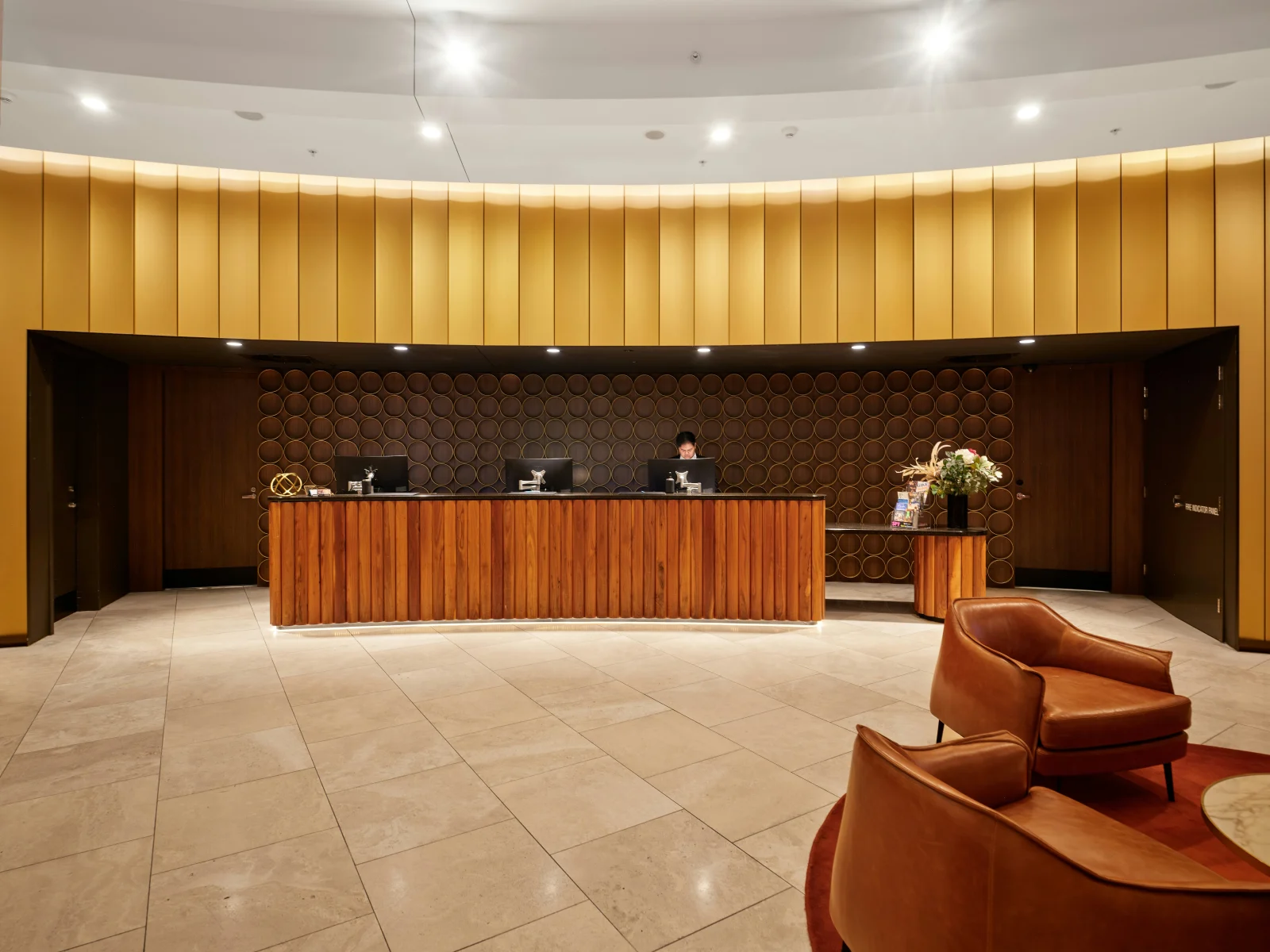
A guest wants to book a standard room for two nights. The request is clear, the dates are available, and the rate is displayed. Yet, the conversation with the chatbot abruptly stops at payment validation. The guest gives up, calls the front desk, and the hotel loses 20 minutes of manual processing time. This scene plays out thousands of times every day in the hospitality industry.
The hotel booking chatbot promises to automate simple requests and free up staff for complex inquiries. But there is a massive gap between the marketing promise and the operational reality. The question isn't whether automation is useful, but when it actually works and at what cost.
Simple bookings are suited for automation; complex ones are not
A simple booking follows a linear path: dates, number of guests, room type, and confirmation. These criteria are binary and can be handled by a bot without ambiguity. Automation works when the guest knows exactly what they are looking for and the inventory allows for it.
Complexity arises as soon as a variable falls outside the standard framework. A request for a connecting room with a sea view, a group of 12 people with staggered arrivals, or a booking with specific cancellation conditions requires contextual understanding that current chatbots do not possess. The bot can collect the information, but it cannot arbitrate between real-time availability and operational constraints.
Segmenting requests is therefore critical. A hotel must identify in advance which inquiries can be fully automated (standard bookings, simple date changes, invoice requests) and which require an immediate transfer to a human agent. Without this segmentation, the bot treats everything the same way, generating frustration with complex cases.

Abandonment rate: why 60% of bot conversations fail
The high abandonment rate of hotel chatbot conversations is not a technology problem, but a journey design issue. A guest abandons the chat when they don't understand what the bot expects from them, when the response is off-topic, or when the process becomes longer than a simple phone call.
Abandonment causes center on three points: natural language understanding, exception handling, and process transparency. A bot that doesn't recognize "I want a quiet room" or "no high floors" forces the guest to rephrase using standardized vocabulary they aren't familiar with. Each rephrasing increases the risk of abandonment.
Exception handling is even more critical. A guest requesting a late arrival after 11 PM or a booking with a pet will hit a wall if the bot cannot process these variables. If the bot responds with a generic message ("I cannot process this request") without offering an alternative, the guest leaves. The best practice is to hand off to a human agent immediately once an exception is detected, rather than letting the bot go in circles.
Process transparency reduces guest anxiety. Clearly displaying remaining steps ("Step 2 of 4: room selection") and indicating the estimated time keeps the guest engaged. A guest who knows they have 2 minutes left is more patient than one who doesn't know where they stand.
PMS integration: the real technical challenge for hotel chatbots
Integration with the Property Management System (PMS) determines whether the chatbot can actually finalize a booking or if it remains a simple conversational form. A non-integrated bot collects information and generates an email for manual processing. An integrated bot checks availability in real time, blocks the room, and confirms the booking instantly.
The technical difficulty lies in the diversity of hotel PMS platforms. Opera, Protel, Mews, and dozens of other systems use different APIs with specific inventory management logic. Some PMS platforms allow full API access, while others limit possible operations or impose synchronization delays. A chatbot must therefore be developed or configured specifically for each PMS, which increases cost and complexity.
Technical friction points appear in dynamic inventory management. A PMS might block a room for 10 minutes during an ongoing booking, but the bot must know how to manage this temporary hold without displaying incorrect availability to another guest. Real-time synchronization becomes critical during high-demand periods when every room counts.
Data security and GDPR compliance add another layer of complexity. The chatbot handles personal data (name, email, credit card number) that must be encrypted and stored according to hospitality standards. Poorly secured PMS integration exposes the hotel to major legal and reputational risks.

When to hand off to a human agent without frustrating the guest
The handoff between bot and human is the most sensitive breaking point in the customer journey. A poorly managed handoff creates frustration: the customer has to repeat all the information already provided to the bot, or they are left waiting without knowing if anyone will ever respond.
Handoff triggers must be defined in advance. A group request (more than 5 rooms), a query with specific conditions (accessibility for guests with reduced mobility, food allergies), or repeated misunderstanding (the bot fails to recognize the request after 2 attempts) must trigger an immediate transfer. The bot must clearly announce the handoff: "I am transferring your request to an agent who will be better able to assist you. Estimated wait time: 3 minutes."
Context transfer is crucial. The human agent must receive the full history of the conversation with the bot: requested dates, expressed preferences, and steps already completed. If the agent asks the customer to repeat everything, the experience is worse than a direct phone call. Modern customer service tools allow for this context transfer, but it must be configured explicitly.
Human agent availability determines the chatbot's effectiveness. A bot that hands off to an unavailable agent (outside opening hours, overwhelmed team) creates frustration. The solution is to adapt the bot's behavior based on availability: during off-peak hours, the bot can be more permissive with handoffs; during peak hours, it must handle more cases autonomously or offer a callback.
Realistic ROI: savings vs. development and maintenance costs
The ROI of a hotel chatbot depends on three variables: the volume of requests handled autonomously, the cost of development and integration, and the cost of ongoing maintenance. Marketing promises often show spectacular savings, but the operational reality is more nuanced.
Take the example of a hotel handling 500 booking requests per month. If 30% of these requests are simple and can be automated, the bot handles 150 bookings autonomously. The time saved for the team depends on the average manual processing time: let's assume 10 minutes per booking, which equals 25 hours freed up per month. This gain must be compared to the cost of the chatbot.
Development costs vary significantly depending on the level of integration. A basic bot without PMS integration costs a few thousand euros in initial setup. A fully integrated bot with a specific PMS, payment management, and advanced customization can reach tens of thousands of euros. Maintenance costs (updates, scenario adjustments, technical support) generally represent 15 to 20% of the initial cost per year.
ROI becomes positive when the volume of automated requests justifies the investment. An independent hotel with 50 bookings per month will struggle to make a complex chatbot profitable. A hotel chain with multiple properties and thousands of monthly requests can recoup the investment in a few months. The key is to size the solution to the actual volume, not the hoped-for volume.

Measuring customer satisfaction on a bot + human journey
Measuring customer satisfaction on a hybrid journey (bot + human) requires specific indicators. The overall Net Promoter Score (NPS) is not enough: you must isolate satisfaction for bot-only interactions, bot-to-human handoffs, and human interactions after a handoff.
Key indicators include the bot conversation completion rate (percentage of requests fully handled by the bot without a handoff), post-bot satisfaction rate (measured by a micro-survey at the end of the conversation), and average resolution time (from the first bot message to the final confirmation, human or automated). These indicators must be tracked monthly to identify friction points.
Satisfaction regarding handoffs is measured differently. A customer who is handed off to a human after a frustrating bot interaction starts with a negative bias. The human agent must therefore overcompensate for this initial frustration. The wait time after the handoff becomes critical: beyond 5 minutes, satisfaction drops significantly. A specific "post-handoff satisfaction" indicator helps measure whether the transfer to a human solved the problem or amplified the frustration.
Qualitative feedback is just as important as quantitative metrics. A chatbot might show a 40% completion rate while generating negative comments about the rigidity of the process. Analyzing customer verbatims (via bot conversations and post-stay comments) reveals irritants invisible in the statistics: misunderstood phrasing, unnecessary steps, and a lack of transparency.
Deciding with full knowledge
Automating hotel bookings via chatbot works under strict conditions: a sufficient volume of simple requests, solid technical integration with the PMS, and a smooth handoff to a human for complex cases. ROI is not guaranteed by the technology, but by the alignment between the deployed solution and the establishment's actual needs.
Hotels that succeed in their automation efforts start by segmenting their requests, identifying fully automatable journeys, and sizing their investment accordingly. They measure customer satisfaction granularly and continuously adjust their handoff triggers. Automation is not an end in itself, but a lever to free up teams for high-value interactions.

.svg)

.svg)
.svg)