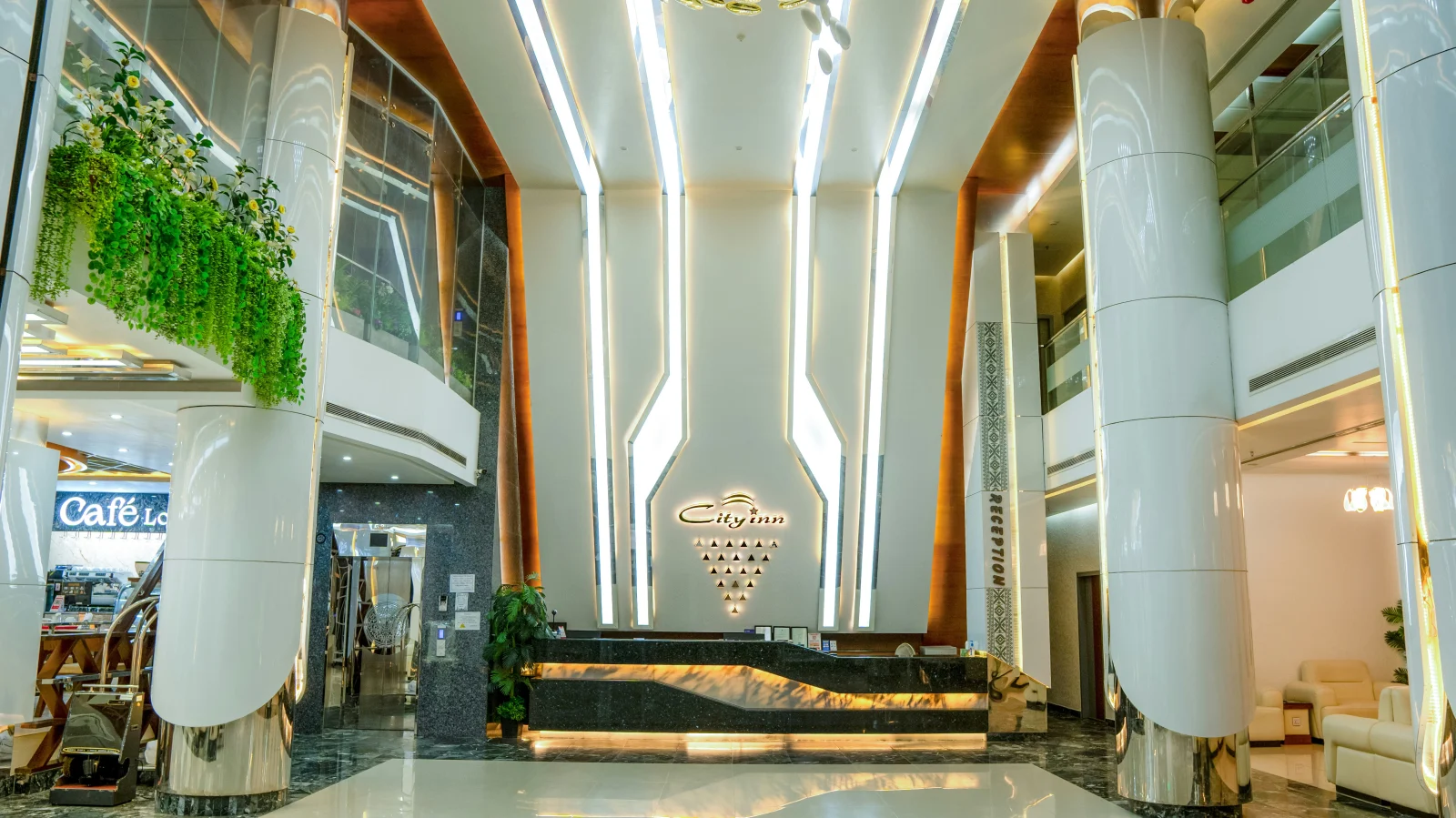
A 28-room boutique hotel in Provence sends out 3,200 emails every year—birthdays, confirmations, post-stay follow-ups. Before automation, the manager spent 6 hours a week on these tasks. Today, she spends that time welcoming her guests. Yet, every message retains the handwritten signature and warm tone that define the house's DNA.
Hotel marketing automation promises efficiency and scalability. But for an independent establishment, the real question isn't technical: how do you industrialize the relationship without dehumanizing it?
Marketing automation: promise and pitfall for boutique hotels
Automation turns customer relations into a repeatable process. For chains, it's an economic necessity. For an independent, it's a strategic trade-off.
The promise: free up operational time while maintaining a consistent presence with every guest. A well-calibrated system sends the right message at the right time, without manual intervention. Booking confirmation at D-7, local recommendations at D-1, review requests at D+3, birthday offers on a fixed date.
The pitfall: copying the playbook of large chains. Generic templates, corporate tone, superficial personalization ("Hello [First Name]"). Guests instantly recognize an automated message. The gap between the promise of authenticity (website, photos, storytelling) and the reality of the communication destroys trust.
The goal isn't to automate for the sake of it, but to systematize what can be without losing what makes the difference: the voice of the house, attention to detail, and contextual relevance.
Three decision criteria:
- Critical volume: below 500 annual bookings, automation remains a luxury. Above 1,500, it becomes essential.
- Brand consistency: if your positioning relies on hyper-personalization, every sequence must be auditable. A generic message undoes months of storytelling.
- Execution capability: a poorly configured system (duplicates, bad timing, incorrect data) does more damage than having no system at all.
Pre-stay, post-stay, and birthday sequences: what really works
Three moments generate 80% of the relationship value: before arrival, after departure, and personal occasions. Each serves a different purpose.
Pre-stay: reduce anxiety, increase ancillary spending
A guest who books 45 days in advance goes through several emotional phases. Initial excitement gives way to doubt ("Did I make the right choice?"), then to impatience. A well-designed pre-stay sequence follows this curve.
- D-30: confirmation + initial editorial touch (history of the property, philosophy).
- 7 days before: practical information + soft upsell (restaurant table, room upgrade).
- 1 day before: welcome reminder + weather + highly targeted local recommendations.
The common mistake: drowning the guest in information. An email sent 7 days before with 12 paragraphs and 8 CTAs will not be read. Prioritize clarity: one idea per message, one primary CTA.
Post-stay: turning the experience into recurring revenue
The guest has just left. You have 72 hours to cement the memory and trigger action.
- 1 day after: personalized thank you (mention a detail from their stay if possible).
- 3 days after: review request (Google, TripAdvisor) with a direct link.
- 30 days after: return offer (discount on next booking, priority access to availability).
The conversion rate of an offer sent 30 days after is 4 to 6 times higher than that of a generic cold campaign. The guest already knows the property, so the perceived risk is zero.
Birthdays & special occasions: the underutilized emotional lever
A birthday email with an exclusive offer (one night free when booking two, automatic upgrade) generates an open rate of over 40%. But the execution must be flawless: exact date, clear offer, short validity window (30 days).
The fatal mistake: sending a generic message on the day itself. The guest expects a thoughtful gesture, not a disguised promotion.

Personalization at scale: combining data and brand voice
Personalization is not limited to inserting a first name. It relies on three levels of granularity.
Level 1: Behavioral segmentation
A couple without children booking in February shouldn't receive the same message as a family of four in July. Basic segmentation (traveler profile, season, length of stay) allows you to adapt content without multiplying templates.
Example: A business traveler booking a weeknight stay receives information about Wi-Fi, grab-and-go breakfast, and flexible checkout times. A couple on a weekend getaway receives recommendations for restaurants, vineyards, and local activities.
Level 2: Transactional history
A returning guest on their third visit shouldn't receive the same welcome email as a first-timer. The system must recognize their history and adjust the tone accordingly ("Great to see you again" vs. "Welcome").
This logic extends to preferences: garden-view room, firm pillow, gluten-free breakfast. If you collect the information, you must use it. A guest who has to repeat what they’ve already specified will lose trust.
Level 3: Systematized brand voice
Technical personalization isn't enough. The tone must remain consistent with the property's identity. A bohemian seaside hotel shouldn't sound like a luxury chateau in Burgundy.
The solution: write a concise editorial guide (max 10 rules) and apply it to all templates. Define allowed/forbidden vocabulary, sentence length, level of formality, and emoji usage. Every sequence must pass this filter before activation.
Minimalist tech stack: Integrated CRM, automation, and PMS for independent properties
The classic mistake: stacking too many tools. A PMS for bookings, a CRM for guest relations, an email tool for campaigns, and a review management system. The result: fragmented data, duplicates, and mounting costs.
For an independent property, the stack should consist of three core components.
Component 1: PMS with native CRM
Choose a modern PMS (Mews, Cloudbeds, Little Hotelier) that includes native guest management. The CRM should centralize bookings, preferences, and communication history without the need for manual data entry.
Deciding factor: API quality. If you need to connect a third-party tool (automation, analytics) later, the API will determine the technical feasibility.
Component 2: Marketing automation platform
Two options depending on your level of maturity:
- Entry-level: Mailchimp, Brevo (formerly Sendinblue). Simple interface, ready-to-use templates, controlled costs. Limitation: advanced personalization is difficult.
- AdvancedHubSpot, ActiveCampaign. Complex workflows, scoring, multi-touch attribution. Steeper learning curve, ROI starting from 1,000 active contacts.
The bottom line: synchronization capability with the PMS (via Zapier, Make, or direct API). Data that doesn't flow between systems is dead data.
Building block 3: Low-code connector (Make, Zapier)
To bridge the gaps between PMS and automation without custom development. Example: triggering a HubSpot workflow when a reservation is confirmed in Mews, or sending a Slack notification when a negative review appears on Google.
Realistic budget for a 20 to 50-room property:
- PMS: €150 to €300/month
- Automation: €50 to €200/month depending on contact volume
- Connector: €30 to €100/month
Total: €230 to €600/month. Compare this to the cost of a part-time employee handling these tasks.
Measurable ROI: from tool investment to incremental revenue generated
Automation is not a cost center; it is a revenue driver. But ROI is not measured in open rates.
Vanity metrics vs. impact metrics
A 35% open rate means nothing if no customers book. Relevant KPIs:
- Post-stay conversion rate: % of customers who book again within 12 months.
- Incremental revenue per sequence: Revenue generated directly attributable to a campaign (birthday offer, 30-day follow-up).
- No-show reduction: Impact of pre-stay reminders on last-minute cancellations.
- Customer Lifetime Value (LTV)average revenue per customer over 3 years, segmented by acquisition channel.
ROI calculation example
Let's take a 30-room hotel with 1,200 annual bookings and an average transaction value of €180.
Hypothesis: implementing a post-stay sequence (D+1, D+3, D+30) + birthday offer.
- Monthly tech stack cost: €400/month, or €4,800/year.
- Repurchase rate without automation: 12% (144 customers).
- Repurchase rate with automation: 18% (216 customers).
- Gain: 72 additional bookings × €180 = €12,960 in incremental revenue.
- ROI: (12,960 - 4,800) / 4,800 = 170%.
This calculation excludes indirect gains: time saved, error reduction, and improved average ratings (more positive reviews collected).
Continuous management
Automation is not "set and forget." Every quarter:
- Audit active sequences (unsubscribe rates, complaints).
- A/B test subject lines, CTAs, and send timing.
- Adjust segments based on changes in the customer mix.
A system that doesn't improve will degrade. Customer expectations evolve, and your communication must keep pace.
Building a system that amplifies the human touch
Hotel marketing automation doesn't replace relationships; it makes them scalable. An independent hotel cannot compete with chains on volume or price. Its advantage lies in authenticity and the attention paid to each guest.
Well-calibrated technology amplifies this advantage: it frees up time for high-value interactions (welcoming guests, providing advice, handling unexpected issues) while maintaining a consistent and relevant presence with every customer.
The trap would be to copy the methods of large chains. The real leverage is to systematize what can be (confirmations, reminders, review collection) in order to invest human energy where it makes a difference (genuine personalization, problem-solving, creating delightful surprises).
Start with one sequence: pre-stay or post-stay. Measure the impact over 90 days. Adjust. Then add the next one. Automation is built in layers, not all at once.